提示词库

AI 提示词库

汇集全球创作者的精选图像、视频与建站提示词。复制任意一条,替换主体或风格,即可用最新模型生成。

311 条提示词 · 每日更新 · 完全免费

共 30 条

Architectural Diorama Coin Art Grid Prompt

Architectural Diorama Coin Art Grid Prompt

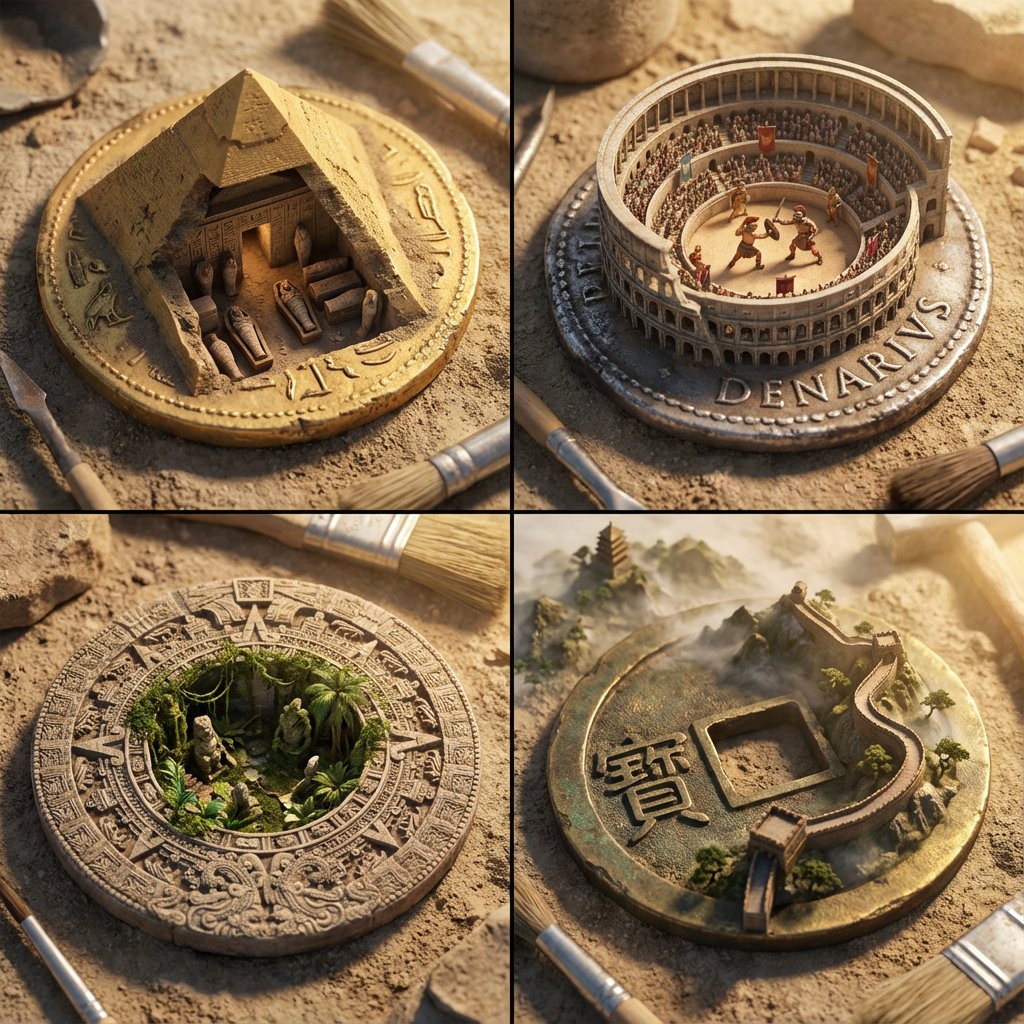
A 2x2 grid of ancient currency that has morphed into architectural dioramas. [Top Left: Egypt - A gold coin where the pyramid is a cutaway revealing a {argument name="Random Tomb Interior" default="Random Tomb Interior"} with tiny mummies] [Top Right: Rome - A silver Denarius where the Colosseum rises up, containing a {argument name="Random Gladiator Fight" default="Random Gladiator Fight"} with moving figures] [Bottom Left: Aztec - A stone disk coin where the temple steps open to reveal a {argument name="Random Jungle Overgrowth" default="Random Jungle Overgrowth"} taking over] [Bottom Right: China - A bronze coin with a square hole, featuring the Great Wall winding out of the coin into a {argument name="Random Mountain Landscape" default="Random Mountain Landscape"}] Archaeological photography, dusty textures, sun-drenched lighting, distinct cultural styles, sharp focus.

Corporate Tech/Anime Eyecatch Image Prompt

Corporate Tech/Anime Eyecatch Image Prompt

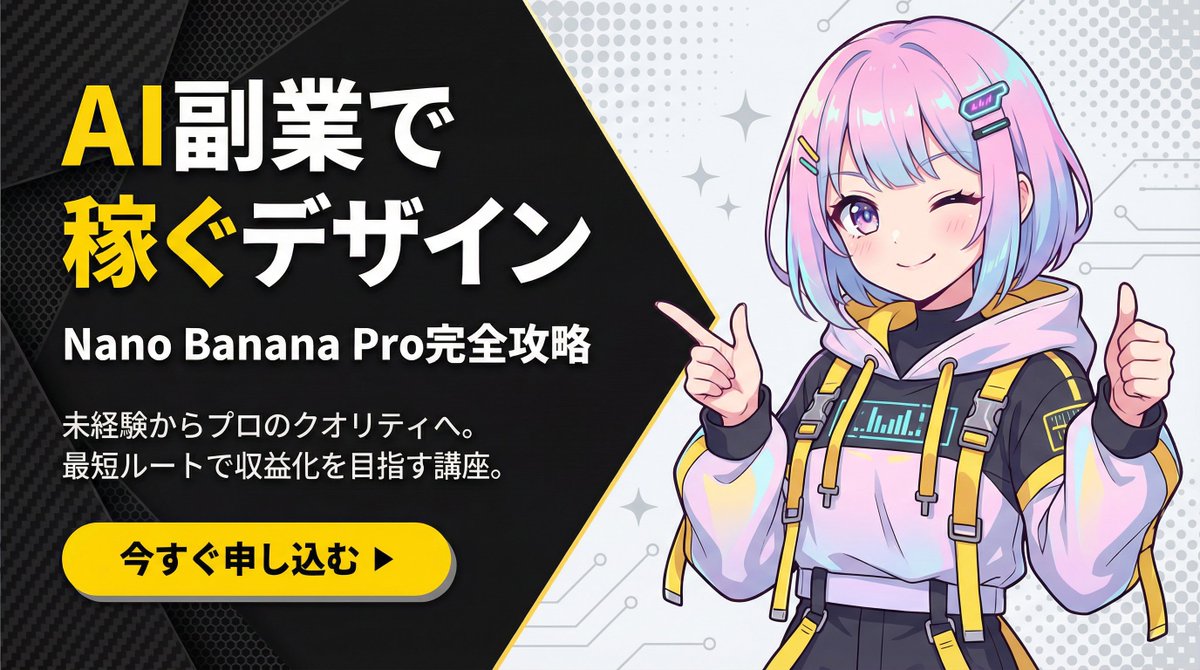
metadata: model_context: "Corporate Tech, High-Energy Business Youtube Thumbnail mixed with Anime Art" image_structure: composition_type: "Diagonal Split Layout (Arrowhead Shape)" visual_flow: "Left Text (Problem/Solution) -> Right Visual (Result/Character)" layers: layer_background_left: shape: "Geometric polygon covering left 60% of screen, with a sharp arrow-point extending into the right side" color: "Matte Black (#1A1A1A)" texture: "Subtle carbon fiber or mesh pattern to add tech depth" layer_typography: location: "Centered within the left black area" alignment: "Left-aligned or Centered" elements: - type: "Headline (Main)" text: "{argument name="main headline" default="Design to Earn\nwith AI Side Jobs"}" style: "Extremely bold, heavy Gothic font (Impact style). White text." highlight: "Apply Bright Yellow (#FFD700) color to the word '稼ぐ' (Earn) and 'AI'" - type: "Sub-Headline (Detail)" text: "{argument name="sub headline" default="Complete Guide to Nano Banana Pro"}" style: "Smaller white sans-serif text, clean and readable" - type: "Body Text (Explanation)" text: "{argument name="explanation text" default="From beginner to professional quality.\nCourse aiming for monetization via the shortest route."}" style: "Small, thin grey or white text block, justified layout" layer_cta_button: shape: "Rounded Pill Shape" color: "Bright Yellow (#FFD700)" text: "{argument name="CTA text" default="Apply Now ▶"}" text_color: "Black" location: "Bottom left, below the text block" style: "Flat design with slight drop shadow" layer_visual_right: shape: "Fills the remaining right side (behind the arrow overlap)" content: "Japanese Kawaii Anime Girl illustration" style: "2D Cel-shaded anime art, high detail, vibrant colors" details: subject: "A cute anime girl with a futuristic / cyber-fashion look" appearance: hair: "Pastel pink and blue gradient bob cut, with cyber hair clips" eyes: "Large sparkling anime eyes, confident smile" clothing: "Stylish tech-wear hoodie with yellow accents to match the background theme" pose: "Dynamic pose, pointing finger towards the text on the left or giving a thumbs up" background_context: "Simple light grey or white background with abstract pop patterns (dots/stars) to make the character stand out" style_and_tone: art_style: "Modern Corporate Tech Design mixed with Japanese Anime aesthetics" color_palette: primary: "Black, Yellow" secondary: "Pastel Pink/Blue (Character), White"

Advanced Two-Step Prompting Strategy for Nano Banana Pro Thumbnails

Advanced Two-Step Prompting Strategy for Nano Banana Pro Thumbnails

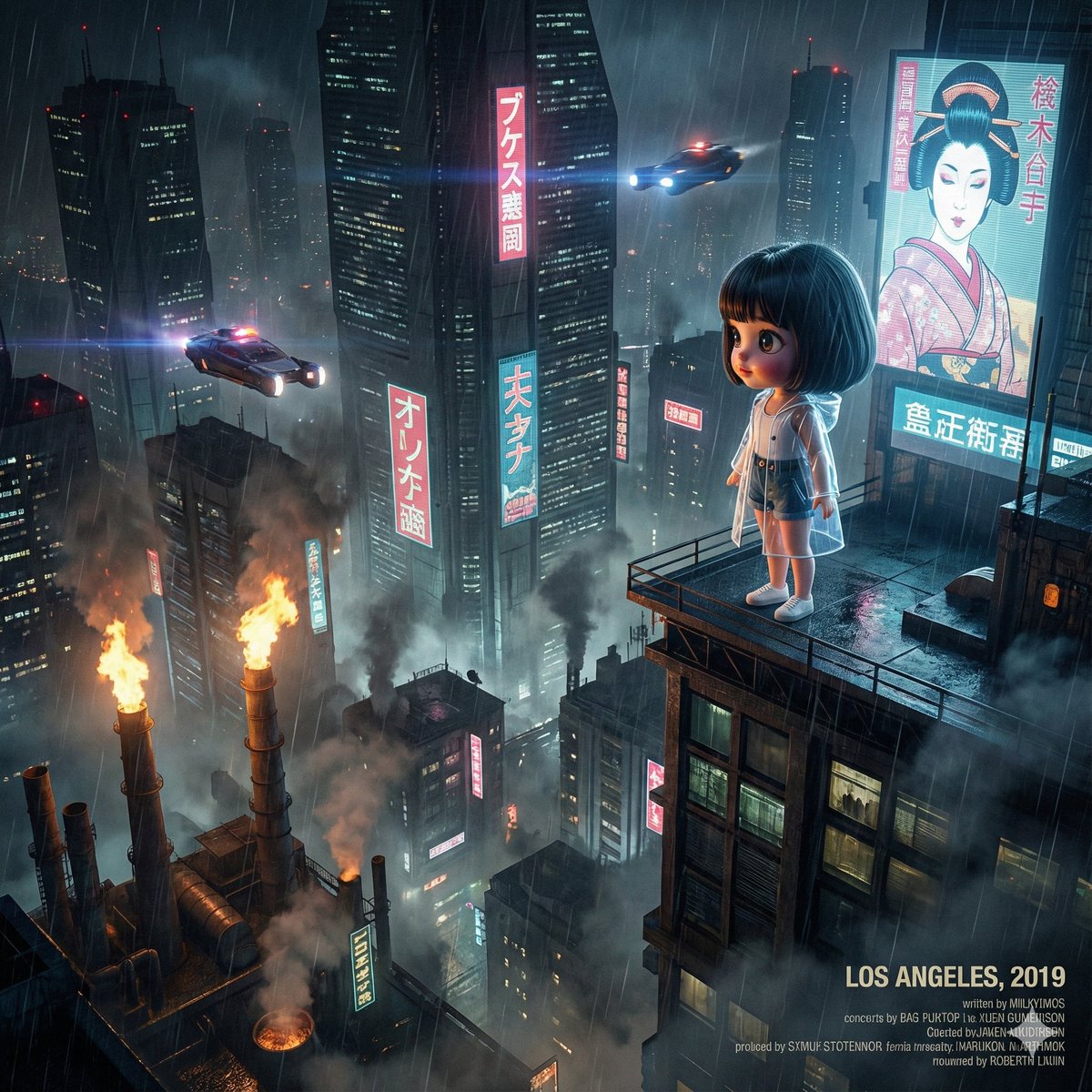
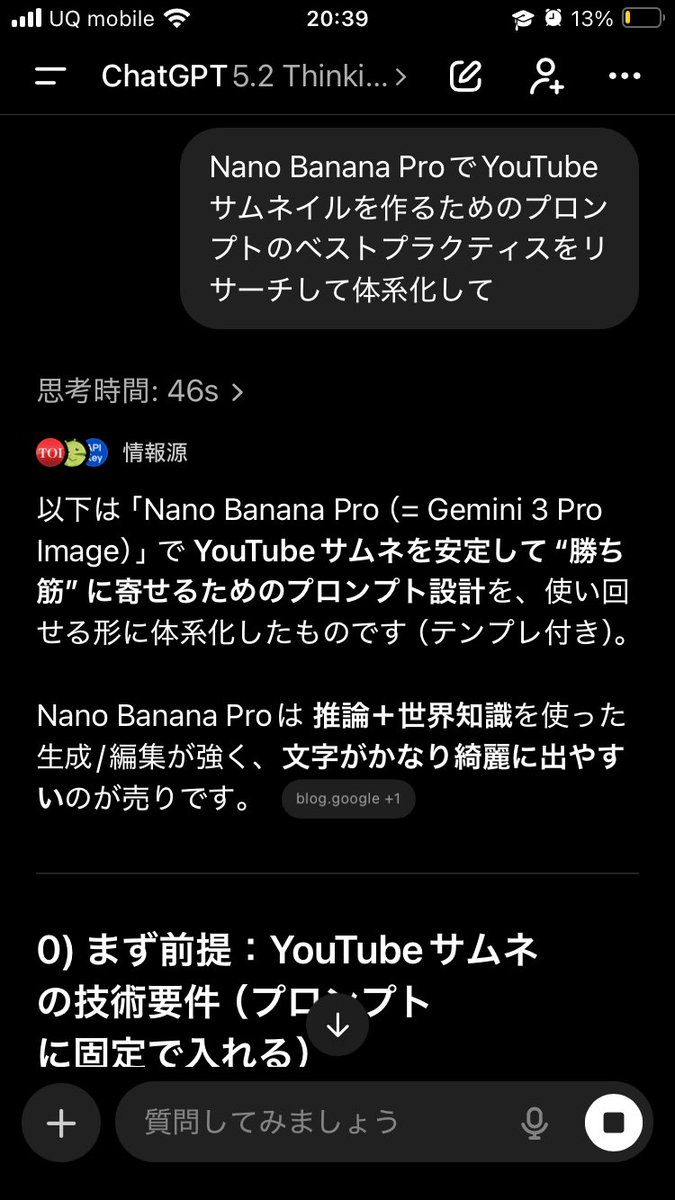
Actually, there's a trickier way to use this. First, have it systematically summarize the information → Then, based on that, have it create the output/deepen the discussion Just doing this makes the quality of the output completely different. This is because if you first create a blueprint in the AI's mind—including "terminology," "judgment criteria," "prohibited items," "patterns," and "priorities"— The next instructions will be output according to that blueprint, making it less likely to deviate. For example, if you want Nano Banana Pro to create a thumbnail: ① First, ask GPT-5.2: "Thoroughly research and systematize the best practices for creating prompts for YouTube thumbnails using Nano Banana Pro. Include common mistakes as well." ② After that, ask: "Based on the current system, create a prompt for making a YouTube thumbnail on the theme of {argument name="theme" default="XX"} using Nano Banana Pro. The video content is like this, and I want to include {argument name="wording" default="this kind of wording"}." Then, input the completed prompt into Nano Banana Pro. It becomes much easier to get the desired output. If you just ask it to "create" every time, the AI outputs based on the moment, leading to inconsistent results. But if you create a map (system) first, it's powerful. Moreover, this method works for side business strategies, sales copy, and video scripts. The versatility is insane. I highly recommend having the AI organize how to create good output before having it perform the task, and then having it think based on that organization. By the way, the thumbnail created this time is the third image. Since the first attempt was mediocre, I had it systematize how to create attractive YouTube thumbnails before generating the prompt.

Cognitive Science-Based High-CTR Thumbnail Design Prompt

Cognitive Science-Based High-CTR Thumbnail Design Prompt

You are an expert in the "Adaptive Salience Model," creatively integrating knowledge from cognitive science (neuroscience, psychology, behavioral economics), and you are a top-tier art director. Deeply analyze the [Input Text (Article Title or Beginning)] provided at the end, and generate a thumbnail image that maximizes the CTR (Click-Through Rate) for that article. If a reference image is attached, place that character as the "person presenting the article content" and maintain consistency. ▼ Instructions for Generation Process (Thinking Process) Use Nano Banana Pro's "Thinking Mode" to logically formulate the composition plan in the following steps before drawing: 1. **[Step 1: Content Analysis and Hook Extraction]** * Identify the "maximum benefit the reader gains" or the "risk of loss if they don't know" from the input text (Application of Prospect Theory). * Select the most intuitive visual metaphor symbolizing the article's theme (e.g., rise, key, lightning, light, darkness, etc.). 2. **[Step 2: Optimization by Adaptive Salience Model]** * **FFA Activation (Face Fusiform Area)**: Maximize the resolution of the character's face, especially the "eyes," and design the composition so that the gaze meets the viewer's (eye contact). Match the expression to the article's tone (surprise, confidence, seriousness, etc.). * **Pop-out Effect**: Use "vivid colors (neon colors or yellow, etc.)" that are complementary to the background color for the title text and important icons to create visual prominence. * **Cognitive Load Theory**: Do not overload the information. Limit elements to "1 face + 1 impactful text + 1 background metaphor." 3. **[Step 3: Layout Design]** * Design the layout, considering the Z-pattern or F-pattern, so that the viewer's gaze flows from the "face" → "high jump-rate text" → "clickable element." ▼ Design and Style Specification * **Composition**: Close-up (bust shot) or medium shot. Place the character in the center or at the intersection of the rule of thirds. * **Taste/Aesthetic**: [Optimize for the genre of the input text. Examples: For business, "sophisticated, trustworthy"; for entertainment, "vibrant, high saturation"; for technology, "cyberpunk, futuristic"] * **Text Rendering (Important)**: * Extract the **most catchy short phrase (recommended 10 characters or less)** from the input text. * **Font**: Use "**Heavy Serif**" font. To enhance readability, the text must have a **thick outline** contrasting with the background color. * **Placement (Jump Rate)**: **Set a high "Jump Rate."** Place the main keywords extremely large, and auxiliary words or sub-information small, creating visual rhythm and contrast. * **Character Direction**: If there is a reference character, adjust their attire to match the article's theme (lab coat, suit, explorer, casual, etc.). ▼ Input Text {argument name="input text" default="(Article title or content)"}

部分提示词收录自 X 平台创作者,版权归原作者所有。